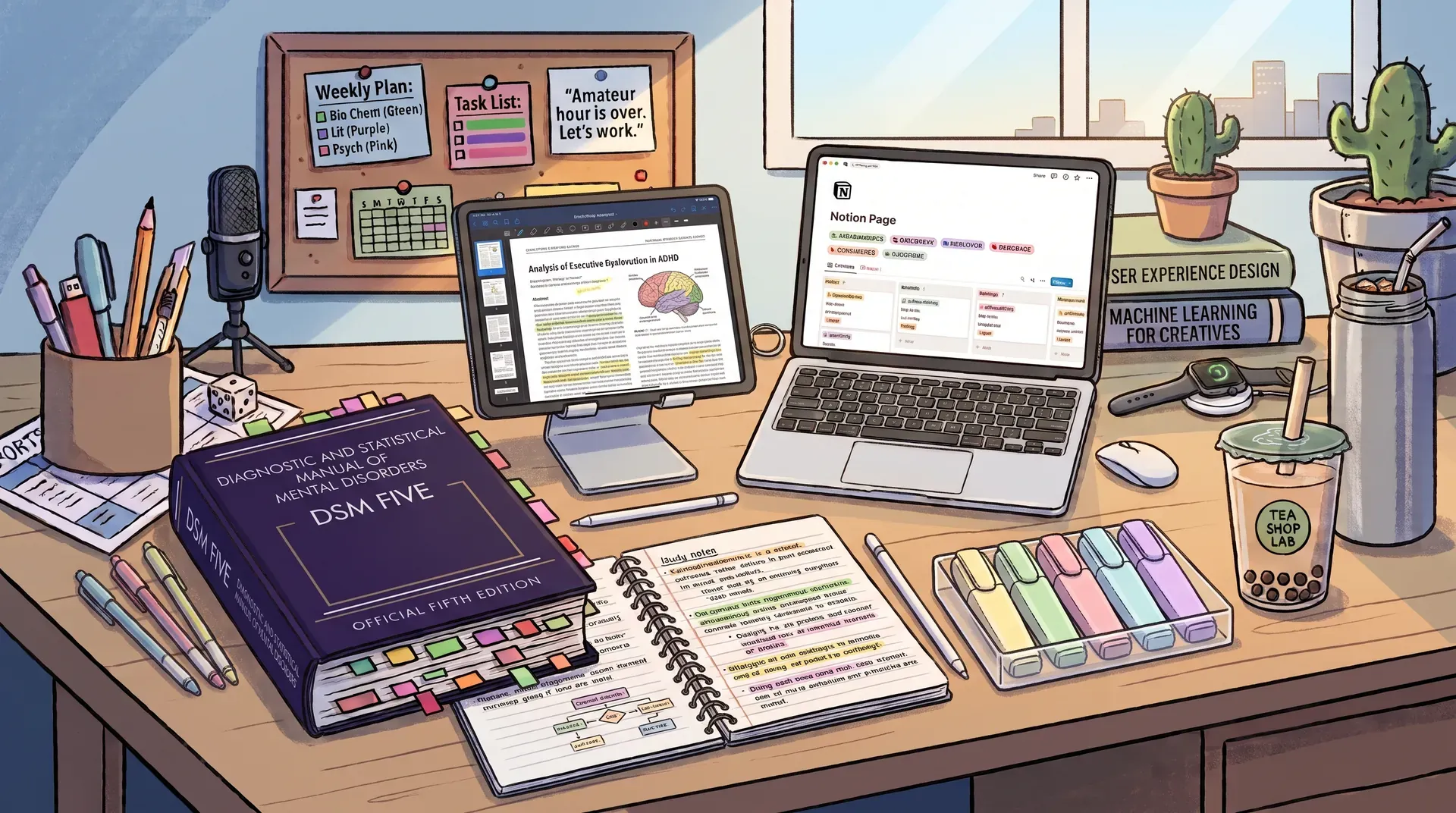
Study Strategies|Study Schedule, Review Plan|2026-11-20
BLEPP Study Schedules: 1-Year, 6-Month, 3-Month & 1-Month Strategic Timelines
Comprehensive, battle-tested study plans tailored for working professionals, full-time reviewees, and last-minute examinees preparing for the Psychometrician Licensure Examination.
Introduction: Designing Your Board Review Architecture
Passing the Board Licensure Examination for Psychometricians requires more than raw enthusiasm; it requires a structured, periodized study plan that prevents cognitive burnout and guarantees comprehensive syllabus coverage.
Different reviewees bring different constraints: working professionals can manage 1 to 2 hours per weekday, while full-time students can dedicate 6 to 8 hours daily. Below are four structured study blueprints designed to take you from foundational reading to peak exam performance.
1. The 1-Year Comprehensive Plan (12 Months)
Target Reviewee: Working professionals, career shifters, or graduates starting with significant knowledge gaps.
Study Pace: 1 to 2 hours on weekdays, 3 to 5 hours on weekends (12–15 hours weekly).
Phase 1: Months 1–2 | Foundations and Diagnostic
→ Read one primary textbook per subject at a steady, manageable pace
→ Complete a baseline diagnostic drill across all four subjects on Reviedy
→ Identify weakness hot-spots and establish study habits
Phase 2: Months 3–5 | Systematic Content Mastery
→ Focused second pass across Assessment (40%), Developmental, Abnormal, and I/O
→ Draft personal concept summaries, flashcard decks, and mnemonic matrices
→ Map every single chapter directly to the PRC Table of Specifications
Phase 3: Months 6–8 | Active Recall and Subject Drills
→ Transition from passive reading to active retrieval practice
→ Answer 30 to 50 TOS-based items daily with rationale analysis
→ Maintain a dedicated physical Error Log for every missed concept
Phase 4: Months 9–10 | Timed Mocks and Weakness Remediation
→ Take a full timed 430- to 450-item mock exam every two weeks
→ Spend double the test duration reviewing rationales and textbook references
→ Re-read high-yield chapters in Psychological Assessment
Phase 5: Months 11–12 | Final Simulation and Taper
→ Weekly timed mocks in Month 11 replicating exact PRC board hours (12.0 total testing hours)
→ Final 14 days: Light review, error notebook review, sleep stabilization
→ Zero new textbook reading during the final 7 days before the exam
2. The 6-Month Balanced Plan (The Gold Standard)
Target Reviewee: Fresh graduates, part-time workers, and examinees who can sustain consistent daily study.
Study Pace: 2 to 3 hours on weekdays, 4 to 6 hours on weekends (20–25 hours weekly).
Phase 1: Months 1–2 | Content Build & Conceptual Mapping
→ Finish one core textbook per subject using the TOS as your syllabus outline
→ Take short 20-item chapter quizzes immediately after each textbook chapter
→ Maintain 40% time allocation for Psychological Assessment (8–10 hrs/week)
Phase 2: Months 3–4 | Active Recall & Targeted Drills
→ Turn study notes into active recall flashcard decks
→ Drill 50 TOS items daily on Reviedy, reading rationales for both correct and incorrect options
→ Take one timed subject exam (100–130 items) every weekend
Phase 3: Month 5 | Timed Full-Length Mocks & Error Dissection
→ Complete one to two full-length mock exams per week under strict board conditions
→ Dissect error notebooks to identify recurrent diagnostic and statistical misconceptions
→ Master speed pacing: ~72–83 seconds per item in Assessment, ~108 seconds (1.8 min) per item in 100-item subjects
Phase 4: Month 6 | Consolidation & Taper
→ First two weeks: Intensive review of high-yield topics and error logs
→ Final two weeks: Taper study hours, take one final confidence simulation
→ Final 5 days: Rest, sleep rhythm alignment, preparing clear plastic exam envelope
3. The 3-Month Intensive Plan (12 Weeks)
Target Reviewee: Full-time reviewees who already possess solid undergraduate foundations.
Study Pace: 3 to 4 hours on weekdays, 6 to 8 hours on weekends (30–35 hours weekly).
Weeks 1–4 | Core Foundations & Rapid Reading Pass
→ Rapid, disciplined reading of standard reference texts across all four subjects
→ Construct master comparison sheets (Theorists in Dev, DSM-5 disorders in Abnormal, Theories in I/O)
→ Daily 25-item mixed diagnostic quizzes on Reviedy
Weeks 5–8 | Retrieval Practice & High-Yield Drills
→ Shift 70% of study time from reading to question answering
→ Drill 60 to 80 TOS questions daily across all four subject pools
→ Intensive review of Kaplan psychometric statistics (z, T, r, SEM) and PAP Code of Ethics
Weeks 9–11 | Full-Length Timed Mock Simulations
→ Take a full two-day mock exam simulation every weekend
→ Log every mistake in your Error Notebook and re-read textbook chapters for missed concepts
→ Drill timed stamina: 3 hours morning session (8:00–11:00 AM), 3 hours afternoon session (1:00–4:00 PM)
Week 12 | Consolidation, Error Log Review & Mental Readiness
→ Review exclusively your personal Error Notebook and Psychological Assessment formulas
→ Cease heavy studying 48 hours before Day 1
→ Inspect exam day Notice of Admission, pencils, calculator, and route to testing center
Study Pace: 4 to 6 hours daily (30–40 hours weekly). Focus strictly on high-yield topics and testing practice.
Week 1 | Diagnostic Baseline & High-Yield Assessment Review
→ Take a comprehensive timed mock on Day 1 to establish baseline scores
→ Dedicate 60% of Week 1 study hours to Psychological Assessment (40% weight)
→ Memorize essential psychometric formulas and PAP Code of Ethics rules
Week 2 | Daily Drills & High-Yield DSM-5 Cutoffs
→ Answer 75 to 100 questions daily with immediate rationale review
→ Study high-frequency DSM-5-TR disorder duration cutoffs (MDD, Schizophrenia, PTSD)
→ Memorize the 10 core developmental theorists and Aamodt's employee selection methods
Week 3 | Full Mock Simulations & Error Remediation
→ Take a full timed mock every other day
→ Focus study sessions exclusively on the specific topics you missed in the drills
→ Maintain a one-page "Cheat Sheet" of hard-to-remember facts for personal memorization
Week 4 | Taper & Exam Logistics
→ Days 1–3: Light review of your one-page error summary and flashcards
→ Days 4–7: Zero heavy studying; sleep 8+ hours nightly to restore prefrontal cortex executive functioning
→ Pack your clear testing kit and locate your assigned testing room
5. The Golden Ratio: Weekly Hour Allocation
Regardless of whether you choose the 6-Month or 3-Month plan, your weekly study hours must mathematically mirror the 40-20-20-20 Table of Specifications:
Study Area
Board Weight
Recommended Share of Hours
Example for 20-Hour Week
Psychological Assessment
40%
40% of Weekly Hours
8.0 Hours / Week
Developmental Psychology
20%
20% of Weekly Hours
4.0 Hours / Week
Abnormal Psychology
20%
20% of Weekly Hours
4.0 Hours / Week
Industrial-Organizational
20%
20% of Weekly Hours
4.0 Hours / Week
Sticking to this mathematical discipline prevents the common pitfall of spending 60% of your time on favorite subjects (like Abnormal Psychology) while neglecting the 40% weight of Psychological Assessment.
Standard References & Citations
Brown, P. C., Roediger, H. L., & McDaniel, M. A. (2014). Make It Stick: The Science of Successful Learning. Harvard University Press.
Dunlosky, J., et al. (2013). Improving students’ learning with effective learning techniques. Psychological Science in the Public Interest, 14(1), 4–58.
Professional Regulatory Board of Psychology. (2023). Table of Specifications for BLEPP. Professional Regulation Commission.
Test Your Board Exam Recall
Cement this article's competencies into long-term memory with practice questions and rationale breakdowns.