
Human development is rarely a uniform climb or a simple checklist of birthdays. Across decades, people re-negotiate who they are, how they relate to others, and what gives their lives meaning while their bodies, minds, and social worlds shift around them.
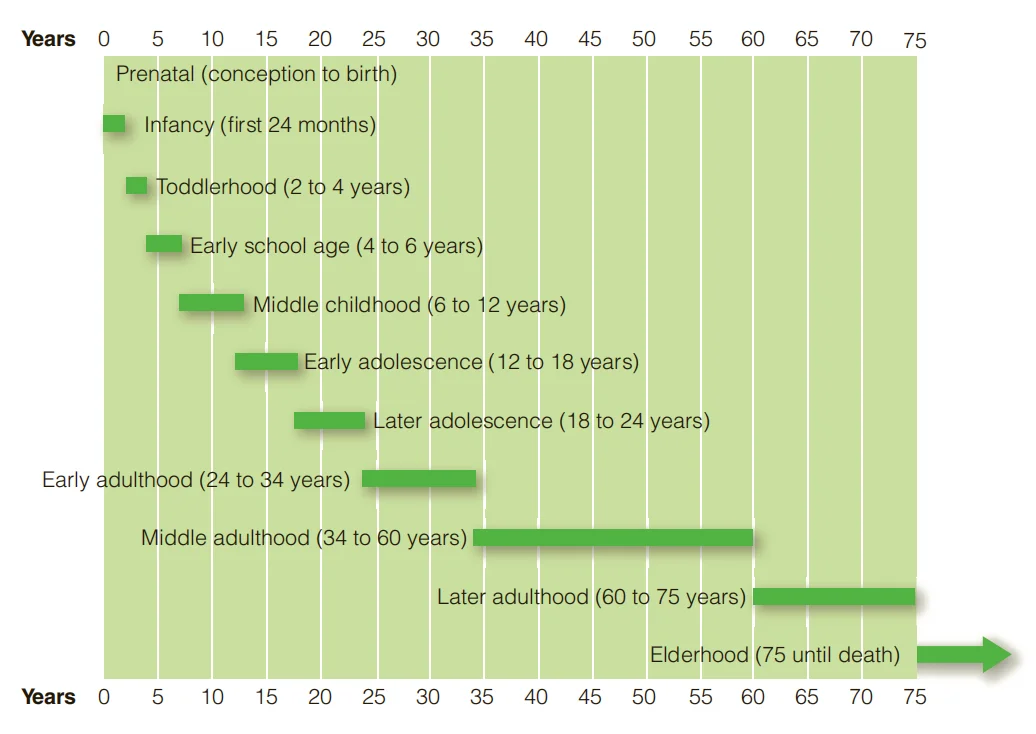
In Development Through Life: A Psychosocial Approach, Barbara M. Newman and Philip R. Newman map this journey across 11 distinct lifespan stages. Building on Erik Erikson’s psychosocial framework, their model integrates physical, cognitive, emotional, and social growth while offering a finer-grained look at life transitions—most notably by dividing adolescence into two stages and establishing Elderhood as a distinct phase late in life.
Classical stage models often treat broad stretches of time as single blocks, which can obscure sharp shifts in identity, autonomy, and aging. Newman and Newman refine that lens by:
Each stages brings together biological changes, cognitive shifts, emotional demands, and evolving social expectations.
Puberty and peer-group dynamics (12–18) differ markedly from emerging adult autonomy, role experimentation, and early career or higher-education choices (18–24).
Distinguishing the transition around retirement and shifting social roles (60–75) from advanced aging and legacy reflection (75+ until death) captures very different realities of late life.
Across stages, individuals navigate a central psychosocial crisis, a central process through which growth occurs, and a tension between a prime adaptive quality and a core pathology.
Architectural Engine of Four Interconnected Components of Psychosocial Theory
Psychosocial Crisis
A predictable, normal psychological tension that arises at each stage because a person’s emerging biological and cognitive capacities collide with new social expectations and cultural demands.
Rather than being a sudden catastrophe, a "crisis" in this framework is a turning point or developmental challenge—expressed as a polarity between a positive (syntonic) pole and a negative (dystonic) pole (such as Trust vs. Mistrust or Group Identity vs. Alienation).
Healthy development does not mean eliminating the negative pole entirely (for example, a healthy adult still needs a realistic capacity for cautious mistrust). Instead, successful resolution means achieving a favorable balance toward the positive pole, providing the psychological strength needed to tackle the next stage’s crisis.
Central Process
The primary mechanism or pathway through which an individual actively works through and resolves a stage’s psychosocial crisis.
If the psychosocial crisis is the problem to be solved, the central process is the method of solving it. It links the individual’s internal psychological needs with their surrounding social environment (their radius of significant relationships, such as parents, peers, teachers, or partners).
Examples across the lifespan:
In Infancy, mutual regulation (attuned back-and-forth interaction with caregivers) resolves Trust vs. Mistrust.
In Middle Childhood, education (formal and informal skill mastery) resolves Industry vs. Inferiority.
In Early Adolescence, peer pressure and validation resolve Group Identity vs. Alienation.
In Later Adulthood, introspection (life review and meaning-making) resolves Integrity vs. Despair.
Prime Adaptive Ego Quality
The enduring psychological strength, virtue, or coping resource that develops when a person successfully navigates a psychosocial crisis through its central process.
Newman and Newman conceptualize these qualities as adaptive mental capacities—such as Hope, Will, Purpose, Competence, Fidelity, Love, Care, Wisdom, and Confidence—that become integrated into the ego. Once formed, each adaptive quality acts as a protective resource that supports resilience and helps the person engage constructively with future stages.
Core Pathology
The maladaptive psychological orientation or rigid defensive pattern that emerges when a stage’s psychosocial crisis is poorly resolved or blocked by severe environmental stress, trauma, or lack of support.
Rather than simply being the absence of an adaptive quality, a core pathology—such as Withdrawal, Compulsion, Inhibition, Inertia, Dissociation, Repudiation, Exclusivity, Rejectivity, Disdain, or Diffidence—actively restricts how the individual engages with the social world. It creates a rigid cognitive and emotional barrier that makes resolving subsequent developmental crises significantly harder.
How the Four Elements Interact as a System
At every stages after the prenatal period, these four mechanisms operate in a continuous sequence:
For instance, in Toddlerhood (2–4 years), rapid gains in walking and language spark a push for independence against parental limits (Autonomy vs. Shame and Doubt). Through Imitation (the central process)—copying caregivers' routines, words, and self-care behaviors—the child tests their own agency. When caregivers scaffold those attempts safely, the child develops Will (the prime adaptive quality: self-directed determination). When autonomy is met with chronic ridicule or rigid control, the child risks developing Compulsion (the core pathology: repetitive, rigid behaviors driven by anxiety and self-doubt).
Pairing the Radius of Significant Relationships with the Four Architectural Elements
In Newman and Newman’s psychosocial theory, the radius of significant relationships defines who carries developmental weight at each stage of life—mapping the social network that shapes, challenges, or supports the individual. Rather than operating in isolation from the four architectural elements (psychosocial crisis, central process, prime adaptive ego quality, and core pathology), the radius of significant relationships provides the relational stage on which those four elements play out.
How the Relational Radius Connects to Each Element
The Relational Pressure Point. A psychosocial crisis emerges where biological and cognitive growth meets social expectations. The radius of significant relationships determines which social expectations press hardest at a given moment—for example, primary caregivers around feeding and comfort in infancy, schoolmates and teachers around skill mastery in middle childhood, or intimate partners and coworkers in early adulthood.
The Relational Mechanism. Many central processes are inherently transactional or social. Mutual regulation in infancy requires caregiver attunement; imitation and identification in early childhood draw on models in the immediate social world; peer pressure and validation in early adolescence operate directly through age-mates; and mutuality in early adulthood relies on reciprocal exchange with peers and partners. Even more inward processes, like introspection in later adulthood or existential reflection in elderhood, are framed against a lifetime of relationships and social roles.
Relational Reinforcement. When significant others respond consistently, scaffold growth fairly, or offer genuine reciprocity, the individual is better able to resolve the stage crisis toward its positive pole—internalizing an enduring ego strength such as hope, will, purpose, competence, fidelity, love, care, wisdom, or confidence.
Relational Friction or Rupture. Conversely, when significant relationships are chronically unresponsive, harsh, rejecting, or unavailable—or when social roles collapse without adequate support—the crisis tilts toward its negative pole, locking in a core pathology (such as withdrawal, compulsion, inhibition, inertia, dissociation, repudiation, exclusivity, rejectivity, disdain, or diffidence) that narrows future relational and developmental flexibility.
Stage-by-Stage Relational Pairing (Postnatal Stages)
Infancy (0–2 yrs) | Primary caregiver(s) (maternal/paternal/caregiving figures) |
Toddlerhood (2–4 yrs) | Parents / primary caregivers |
Early School Age (4–6 yrs) | Family members, early playmates, preschool/kindergarten figures |
Middle Childhood (6–12 yrs) | Family, teachers, peers, coaches/group leaders |
Early Adolescence (12–18 yrs) | Peer group, friends, early romantic/social circles, family |
Later Adolescence (18–24 yrs) | Peers, romantic partners, mentors, educators, family (shifting autonomy) |
Early Adulthood (24–34 yrs) | Romantic partner(s), close friends, colleagues, emerging family |
Middle Adulthood (34–60 yrs) | Spouse/partner, children, extended family, coworkers, community |
Later Adulthood (60–75 yrs) | Spouse/partner, adult children, friends, community/retirement networks |
Elderhood (75+ yrs) | Family caregivers, remaining peers/friends, health/support network |
11 Stages of Human Development
Prenatal Stage (Conception to Birth).
Rather than focusing on social crises, this foundational stage centers on rapid biological organization across the three trimesters—genetic transmission, cellular differentiation, and organ and structural formation. Because growth is so rapid, development during this period is closely tied to maternal health, nutrition, and minimizing exposure to teratogens.
Infancy (Birth to 2 Years)
Psychosocial Crisis: Trust vs. Mistrust
Central Process: Mutual Regulation
Prime Adaptive Quality/Core Pathology: Hope vs. Withdrawal
Infancy is marked by rapid sensory and motor development, sensorimotor intelligence, early emotional regulation, and attachment formation. Through mutual regulation—the back-and-forth attunement between infant cues and caregiver responses—the child builds a baseline sense of hope or risks withdrawal when basic needs and emotional signals go chronically unmet.
Toddlerhood (2 to 4 Years)
Psychosocial Crisis: Autonomy vs. Shame and Doubt
Central Process: Imitation
Prime Adaptive Quality/Core Pathology: Will vs. Compulsion
As mobility expands and language takes off, toddlers experiment with independence, fantasy play, and early self-control. Imitation helps them test everyday routines and boundaries, fostering will when supported—or shame and doubt and rigid compulsion when autonomy is met with harshness or over-restriction.
Early School Age (4 to 6 Years)
Psychosocial Crisis: Initiative vs. Guilt
Central Process: Identification
Prime Adaptive Quality/Core Pathology: Purpose vs. Inhibition
Children at this stage begin forming a self-theory, engaging in cooperative and imaginative group play, navigating early moral awareness, and developing gender role understanding. Through identification with caregivers and role models, they can cultivate purpose—or experience guilt and inhibition if their curiosity and initiative are routinely shut down.
Middle Childhood (6 to 12 Years)
Psychosocial Crisis: Industry vs. Inferiority
Central Process: Education
Prime Adaptive Quality/Core Pathology: Competence vs. Inertia
Middle childhood broadens the social world into school, structured skill-building, team play, and concrete operational reasoning. Education—both formal schooling and broader skill learning—supports self-evaluation and competence, whereas repeated setbacks or social comparison can foster inferiority and inertia.
Early Adolescence (12 to 18 Years)
Psychosocial Crisis: Group Identity vs. Alienation
Central Process: Peer Pressure/Validation
Prime Adaptive Quality/Core Pathology: Fidelity vs. Dissociation
Pubertal changes, emerging formal operational thinking, heightened emotionality, and early romantic or sexual exploration converge with a strong pull toward peer belonging. Navigating peer pressure and validation helps adolescents build fidelity within a group, while rejection or disconnect can lead to alienation and dissociation.
Later Adolescence (18 to 24 Years)
Psychosocial Crisis: Individual Identity vs. Identity Confusion
Central Process: Role Experimentation
Prime Adaptive Quality/Core Pathology: Fidelity vs. Repudiation
Unlike early adolescence, which leans heavily on group belonging, this stage emphasizes forging an individualized sense of self. Through role experimentation—testing values, relationships, and early educational or career paths—young people work toward greater autonomy from parents, internalized morality, and fidelity, or risk identity confusion and repudiation.
Early Adulthood (24 to 34 Years)
Psychosocial Crisis: Intimacy vs. Isolation
Central Process: Mutuality Among Peers and Partners
Prime Adaptive Quality/Core Pathology: Love vs. Exclusivity
Early adulthood often centers on building committed partnerships, launching a career or lifestyle, managing a household, and, for many, childbearing. Mutuality with partners and peers supports love and deep connection, whereas guarding against vulnerability can push a person toward isolation or narrow exclusivity.
Middle Adulthood (34 to 60 Years)
Psychosocial Crisis: Generativity vs. Stagnation
Central Process: Person-Environment Interaction and Creativity
Prime Adaptive Quality/Core Pathology: Care vs. Rejectivity
Midlife frequently brings peak career responsibilities, ongoing partnership work, wider civic involvement, and physical adjustments to aging. Through active person-environment interaction and creativity, adults can channel energy into mentoring, raising children, or contributing to their communities (care), or slip into stagnation and rejectivity.
Later Adulthood (60 to 75 Years)
Psychosocial Crisis: Integrity vs. Despair
Central Process: Introspection
Prime Adaptive Quality/Core Pathology: Wisdom vs. Disdain
Many people in this stage navigate retirement or shifting work roles, physical changes, and new community or leisure pursuits. Introspection allows individuals to review and accept their life story, fostering wisdom, while unresolved regret can fuel despair or disdain.
Elderhood (75 Years until Death)
Psychosocial Crisis: Immortality vs. Extinction
Central Process: Social Support/Existential Reflection
Prime Adaptive Quality/Core Pathology: Confidence vs. Diffidence
In advanced old age, individuals often contend with greater physical frailty while integrating their life history and preparing for the end of life. Drawing on social support and existential reflection helps sustain confidence and a sense of enduring legacy in the face of extinction and diffidence.
To get more experience, pre-order now the Developmental Psychology: From Womb to Tomb 2nd Edition here: (physical copy) https://forms.gle/RJVLLFUNBunWxqF17 or (digital copy) https://forms.gle/Spt7qyhgYbWaVNa5A
References
Newman, B. M., & Newman, P. R. Development through life: A psychosocial approach (13th ed.). Cengage Learning.
Orenstein, G. A., & Lewis, L. Erikson's stages of psychosocial development. In StatPearls. StatPearls Publishing.
Disclaimer: All information contained in this article is summarized for educational purposes. While we strive for accuracy, this content is intended to serve as a general overview rather than a definitive source. It does not constitute professional, psychological, or medical advice. Please consult a qualified professional for specific concerns.